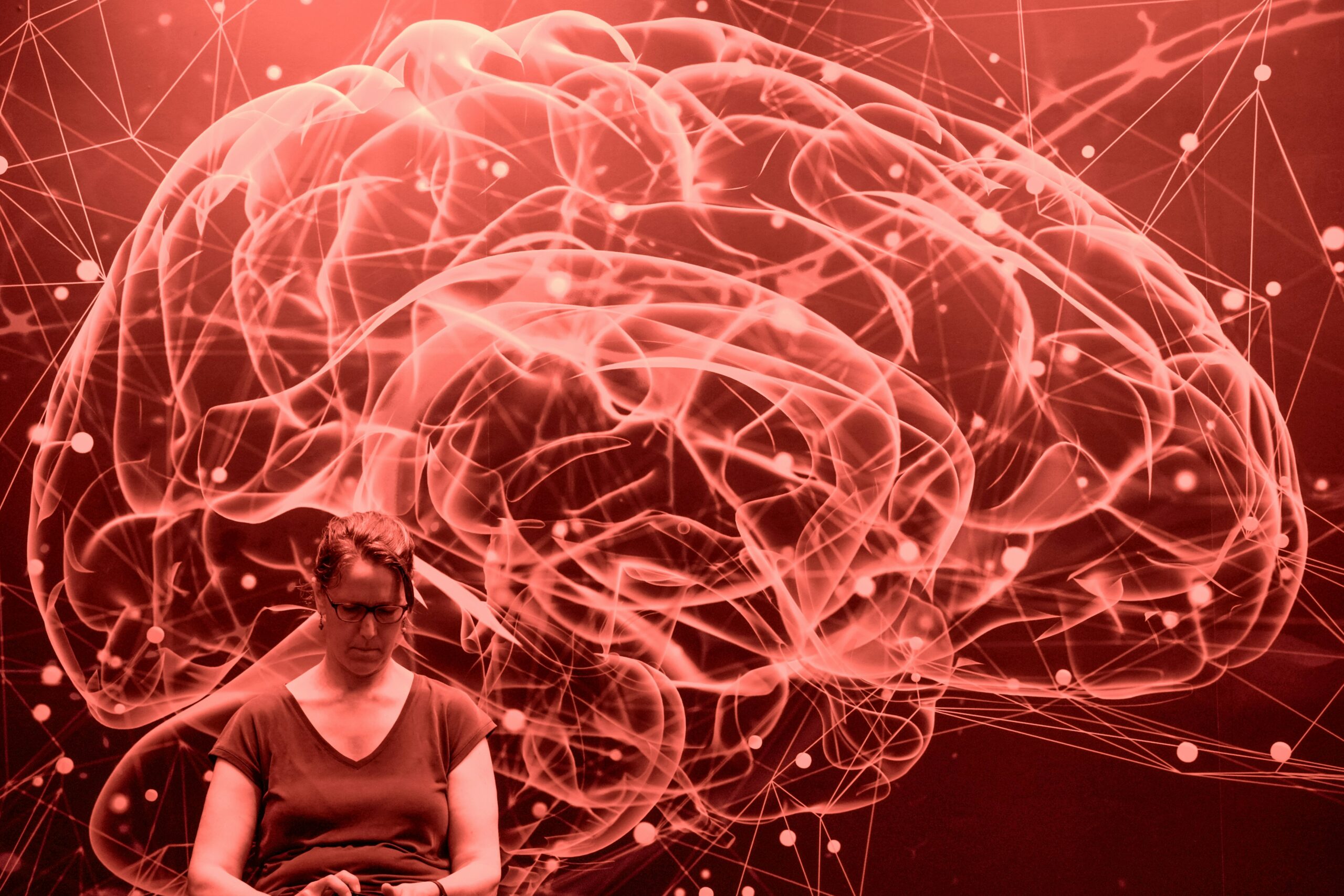
How much of your life are you actually choosing?
According to cognitive neuroscientists, 95% of your daily choices, emotional reactions, and trauma responses are dictated by your subconscious mind.
If you are struggling to change your self-concept, heal from past trauma, or manifest a different reality; it is because you are trying to solve a deep-seated problem with your 5% conscious mind. You are fighting an uphill battle against an invisible, deeply embedded operating system.
To permanently change your self-concept, you must learn how the subconscious mind is programmed, how Western science and Zen philosophy approach this system, and how to activate the pineal gland as a physical bridge for transformation.
Understanding The Subconscious Mind: How Programming Begins
Your subconscious mind functions like a hyper-powered supercomputer. It does not think, analyze, or judge, it simply executes the software programs that have been installed within it from your earliest days.
The Childhood Theta State
From birth until approximately age seven, a child’s brain operates primarily in Theta brainwave frequencies. Theta is a deeply hypnotic state. Because the conscious, analytical mind has not yet developed, children absorb everything from their environment without a filter, they make meaning of everything that comes their way. You downloaded your beliefs about self-worth, love, safety, and money directly into your subconscious mind from your parents, caretakers, and culture.
Your environment played such a huge role in who are now.
Trauma Loops and the Self-Concept
When you experience trauma or emotional distress, your nervous system registers a threat. To keep you safe, the subconscious mind creates a protective survival program.Unfortunately, these programs harden into your permanent self-concept, the core umbrella blueprint of who you believe you are. If your early environment taught you that love is conditional, your internal database installs a limiting program.
Decades later, your adult self-concept remains anchored to a survival mechanism created by a child because the subconscious mind is still running the old software.
The Two Pillars of Mind Mastery: Western Science vs. Zen Philosophy
To successfully rewrite your underlying programs, you must bridge the analytical precision of the West with the experiential, spiritual depth of the East. Both disciplines describe the exact same inner workings of the subconscious mind using different frameworks.
- The Western Perspective: Neuroplasticity and the RAS – In Western psychology and neuroscience, subconscious programming is understood through neural pathways and the Reticular Activating System (RAS).The Brain’s Filter: The RAS is a bundle of nerves at the brainstem acting as a gatekeeper. It filters out millions of bits of data per second, allowing only information that matches your current self-concept to enter your conscious awareness.The Confirmation Bias: If your self-concept is anchored in trauma, your RAS will literally scan the room to find evidence of rejection while ignoring signs of love. The Fix: The West relies on neuroplasticity, rewiring the physical brain through conscious repetition, behavioral changes, and emotional rehearsal to alter what the subconscious mind accepts as true.
- The Eastern Perspective: Zen Awareness and Samskaras – Zen philosophy bypasses the mechanics of the brain and speaks directly to pure, unconditioned consciousness. The Illusions of Mind: In Eastern traditions, your subconscious programs are called Samskaras-the mental impressions and emotional scars left behind by past experiences. These Samskaras create the “ego-mind.” The Attachment to Identity: Zen teaches that suffering occurs because you identify with these programs. You believe you are your anxiety or your trauma, rather than recognizing that you are the vast, unblemished awareness observing the thoughts.The Fix: Instead of trying to aggressively fight a thought, Zen emphasizes stillness, meditation, and radical detachment.
By sitting in silent awareness, you withdraw your energy from the conditioning of the subconscious mind, causing old patterns to naturally wither away.
The Pineal Gland: The Biological Bridge of Transformation
Where do Western biology and Eastern mysticism meet? The answer lies in the center of your brain: the pineal gland. Historically revered by French philosopher René Descartes as the “seat of the soul,” and known in Eastern spirituality as the physical counterpart to the Third Eye, this tiny gland is crucial for accessing the subconscious mind.
The Transducer of Reality
Biologically, the pineal gland produces melatonin and regulates your circadian rhythm. Energetically, it acts as a transducer. A transducer is a device that converts one form of energy into another. When you visualize a new reality or an upgraded self-concept during deep meditation, the pineal gland converts that high-frequency spiritual energy into physical, neurochemical signals.
Entering the Gamma State
Through specific breathwork and deep meditation, pressure is applied to the pineal gland via its unique piezoelectric properties. This activation causes the brain to emit Gamma brainwave frequencies. In Gamma, your brain achieves high-level processing and profound synthesis.
The analytical barrier between the conscious and subconscious mind completely drops. The pineal gland releases powerful metabolites that alter your perception, making your internal visualization feel more real than your external environment. This is the exact moment a new self-concept is deeply stamped onto your psyche.
A Step-by-Step Guide to Changing Your Underlying Programs
Knowing how the mind works is useless without application. Use this four-step protocol to bridge Western science and Zen to reprogram your self-concept:
Step 1: Capitalize on Hypnagogic Windows
Twice a day, your brain naturally dips into a hypnotic Theta state: right as you are drifting off to sleep and immediately when you wake up. Do not look at your phone or social media during these times. Instead, loop an audio recording of your new self-concept affirmations or vividly visualize your healed state. The subconscious mind accepts this data during these windows without any analytical resistance.
Step 2: Practice Zen Mindful De-Conditioning
When an old trauma loop triggers (e.g., a sudden wave of unworthiness), do not fight it, and do not judge it. Sit perfectly still. Locate the physical sensation of the emotion in your body. Breathe into it and observe it as pure awareness. By refusing to mentally react or weave a story around the feeling, you break the automated neural loop and dissolve the old imprint within the subconscious mind.
Step 3: Interrupt the Automated Neural Patterns
The mind loves familiarity. To break its momentum, you must catch yourself in the act of playing an old program. The moment you start thinking, “I can’t handle this,” physically interrupt the pattern. Snap your fingers, change your physical posture, or step into a new room. This creates a brief pause in your neurology, allowing you to consciously choose a new thought aligned with your desired self-concept.
Step 4: Elevate Your Emotional State
The subconscious mind does not respond to intellectual words, it responds to images and intense emotions. If you repeat an affirmation while feeling discouraged, your system registers the discouragement, not the words. When visualizing your new self-concept, cultivate the physical feeling of gratitude, safety, or triumph before the physical manifestation appears. This fools your biology into believing the change has already occurred.
The Final Shift: Becoming the Master of Your Mind
Healing trauma and shifting your self-concept is not about destroying your past, it is about reclaiming your power as the programmer of your life. By utilizing Western neuroplasticity to intentionally build new pathways, practicing Zen detachment to quiet the ego, and activating the pineal gland to embed your vision, you transition from an automated creation of your past to a conscious creator of your future.
Your subconscious mind will have no choice but to project your new internal reality onto the world around you.
Ready To Become The Master Of Your Subconscious Mind?
Your self-concept is a direct reflection of your deeply rooted subconscious beliefs. While understanding this connection is powerful, true transformation requires bridging the gap between theory and daily practice. By blending the scientific precision of Western neuroplasticity with the mindful peace of Zen teachings, you can actively rewrite the internal programming that shapes your entire reality.
Take Control Today
- Break free from automatic, past-driven loops.
- Align your beliefs to support your highest self-concept.
- Bridge science and spirit for lasting mental mastery.
Grab Your Copy Now
Ready to practically transform your internal reality? Click the link to grab my book,(What Stands Between You and What You Want) currently available at a special limited-time discount applied automatically at checkout . Join over 100 readers who have already unlocked powerful personal transformations. Get the exact, step-by-step exercises to seamlessly merge Western tools and Zen wisdom into your daily life today.

Your future is not dictated by where you have been, but by the conscious shifts you choose to make right now. Trust the process, embrace the tools, and step into the master of your mind.
Table of Contents

Naserian is a writer, personal growth advocate, and founder of The Awakened with Naserian. A founder of Naserian’s Heart of Healing Foundation that supports vulnerable girls & widows in her community. Through her work, she explores self-awareness, the subconscious mind, emotional healing, self-concept, intuition, and conscious living. Drawing from both personal experience and years of self-discovery, she is passionate about helping others understand themselves more deeply, break limiting patterns, and create meaningful transformation from within. She is also the author of What Stands Between You and What You Want, a guide to understanding the hidden beliefs and subconscious patterns that influence our lives.